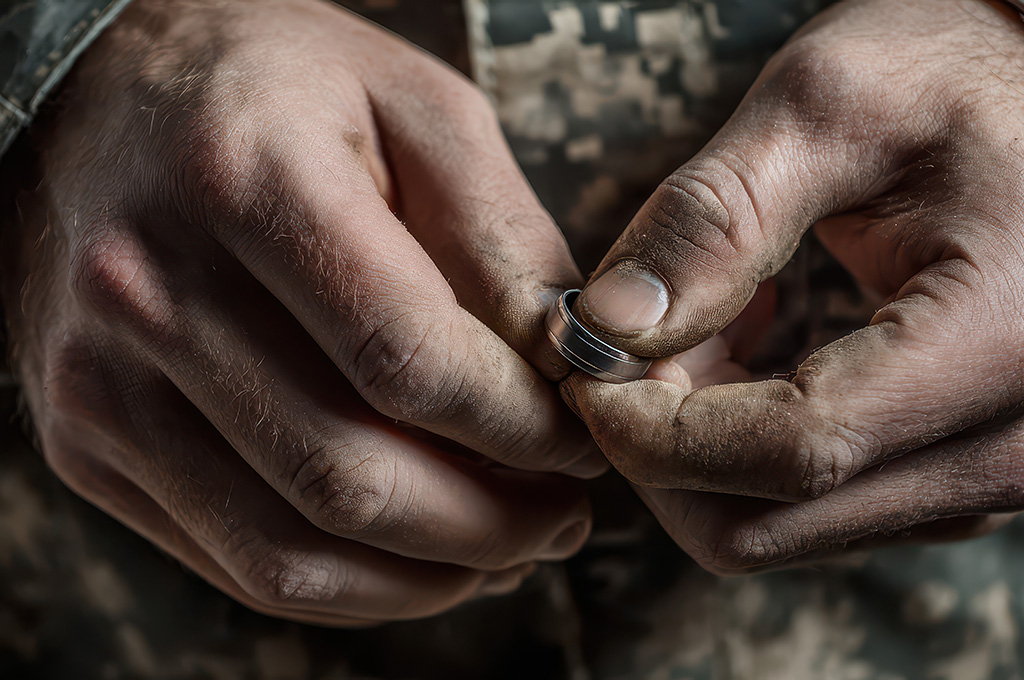
Building Better Habits as a Veteran

Over 60 percent of post-9/11 veterans report difficulty adjusting after leaving service, with loss of routine ranking among the top reasons. The military trains you for a life built on routines, accountability, purpose, and a clear sense of what each day requires. When this structure disappears after discharge, so does a lot of what made daily life straightforward.
That gap is where habits either get rebuilt or fall apart. Building better habits as a veteran means reconstructing the architecture that made you effective on your own terms this time.
Why Building Better Habits as a Veteran Trounces Motivation Alone
Motivation is important, but on its own, it is unreliable. Veterans know this. There were plenty of mornings when you didn’t feel like doing what the day required, but you did it anyway. But the main reason is often that the behavior was embedded in your routine, not really depending on how you felt.
Your outcomes are often determined by the systems you’re entrenched in. The veteran who saves $50,000 over a few years and the one who doesn’t will often share the same goal. However, what separates them is the daily system: automatic transfers, weekly budget reviews and pausing before impulse purchases.
The Habit Loop: How Behavior Actually Plays Into Finances
Every habit follows the same neurological pattern:
Cue: The trigger
Routine: The behavior
Reward: The payoff your brain registers
The catch is you can't just delete a habit. Those patterns are already worn into the brain like a trail through tall grass. What you can do is reroute them.
Say you've got a habit of impulse-spending online after the kids go to bed. The trigger is probably boredom or stress. The payoff is a few minutes of distraction and the small rush of buying something. Willpower won't fix that on its own. But opening your budgeting app instead of a shopping site scratches the same itch, something to focus on, a sense of control, without the credit card damage.
It’s the same loop but a different behavior.
Four Rules for Building Better Habits as a Veteran
Rule for new habits | How it Works | What to do |
|---|---|---|
Make tasks visible | Visible cues trigger action | Create to-do lists and leave them on the kitchen table |
Make tasks enjoyable | Pair a habit with something enjoyable | Complete tasks along with something fun |
Make tasks simple | Reduce steps to the behavior | Auto-transfer to savings |
Make tasks satisfying | Reward completion visibly | Wall calendar streak |
Make it obvious. If the habit is invisible, you won't remember to do it. Put your running shoes by the bed. Leave your budget sheet open on the kitchen table. Set a recurring calendar reminder. The more visible and unavoidable the cue, the more likely you are to act on it.
Make it enjoyable. Pair the habit with something you enjoy. Review your budget with a cup of good coffee. Listen to a podcast while exercising. This is sometimes called temptation bundling, linking an action you need to do with an experience you want to have.
Make it simple. Reduce friction. If you want to start reading about personal finance, leave the book on your nightstand. Not in a drawer, not on a shelf, not in an app that requires three taps to open. If you want to save money, set up an automatic transfer so the decision is already made.
Make it satisfying. Behavior that is immediately rewarded gets repeated. Use a wall calendar and mark each day you complete the habit. The streak itself becomes a reward. Never underestimate how motivating it is to simply see that you've shown up, day after day.
These rules only require a cue you'll actually notice, a routine with low enough friction to start, and a payoff your brain registers as worth repeating. Get those three things right, and the behavior takes care of itself.
Behavior Follows Belief
Most people approach habits backward, starting with a target number and trying to force behavior toward it. A more durable approach starts with identity. Something more than just "I want to get my finances in order," and instead more like "I am the kind of person who applies the same discipline to my money that I applied to my service."
Every time you sit down to review your budget, you're casting a vote for that identity. No single action transforms you. But as the votes accumulate, the behaviors become self-reinforcing.
For veterans, this has particular weight. Research on military-to-civilian transitions consistently finds that loss of military identity is a significant predictor of adjustment difficulties, including depression and risky behavior. Rebuilding identity, consciously, through daily action, is one of the most powerful tools available.
The Three Habits That Matter Most
Some routines trigger cascades of positive change across unrelated areas. These are keystone habits. For veterans building better habits as a veteran in civilian life, three stand out:
Habit | Daily Time | Key Benefit |
|---|---|---|
Morning routine | 30–60 min | Establishes daily structure |
Financial tracking | 10–15 min | Reduces waste, forces clarity |
Reading | 20 min | ~30 books/year, compounds knowledge |
Research confirms the effect, showing participants who began a consistent exercise habit also developed better financial discipline, reduced smoking, and improved study habits without targeting those behaviors directly.
Don’t Rely on Willpower Alone
Over 600 studies in social psychology have confirmed that after exerting self-control on one task, people perform worse on the next. Relying on willpower alone is unreliable, especially under stress.
What works is environmental design.
Delete shopping apps
Set up automatic bill payments and savings transfers
Keep a book where you'd otherwise reach for a screen
Remove saved credit card information from retail sites
The structure you lived in during service was an environment engineered to make good behavior easy and bad behavior difficult. You can design your own civilian environment the same way.
Habit Stacking and the Two-Minute Rule
Two techniques worth using immediately, especially if you're coming off a period where routine fell apart entirely.
Habit stacking: Link a new habit to an existing one. "After I pour my morning coffee, I will review my financial goals for five minutes." You're borrowing the momentum of a behavior you already have.
The two-minute rule: Scale any new habit down to two minutes or less. Don't commit to "review my entire budget all at once." Commit to simply "opening the spreadsheet." The goal is to become the kind of person who shows up.
If you're used to operating at high standards, this probably sounds too small to matter, but that’s kind of the point. The enemy of a good habit is not taking the small steps to get started in the first place. Two minutes removes the excuse, and once you've started, you'll usually keep going.
Start Building These Habits Today for a Better Tomorrow
Here's what all of this adds up to: building better habits as a veteran is not about willpower or motivation. It is about architecture. The daily behaviors you repeat, or avoid, compound over years and decades into the shape of your financial security, your relationships, your health, your career, and your sense of whether your life is headed somewhere worth going.
You don't need to overhaul everything at once. In fact, trying to do that is one of the most reliable ways to fail. Instead:
Define your goals. Write one or two sentences about what you're building toward. This is the compass that gives your habits direction.
Choose one keystone habit. Pick something small and sustainable, a morning routine, daily financial tracking, or a nightly reading practice.
Attach it to something you already do. Use the habit-stacking formula to reduce the friction of getting started.
Design your environment. Remove obstacles to good behavior. Add obstacles to bad behavior. Make the right choice, the easy choice.
Find someone to check in with. A spouse, a friend, a fellow veteran, a mentor. Weekly accountability dramatically increases follow-through.
Start today. Not just after "figuring things out." Start as soon as you can by opening the spreadsheet, reading one page, writing the mission statement. It only takes a couple of minutes to kickstart.
The structure you operated in during your years of service taught you something most people never learn: that daily discipline, applied consistently over time, produces results that talent and intention alone never will. That lesson didn't expire when you transitioned out.